Costa Rican surfing has, at times, become a victim of its own success. Once sleepy and undeveloped towns have quickly turned into major population centers complete with every modern convenience and every modern scourge. One of the most attractive and spectacular allures of traveling to surf (especially so in Costa Rica) is the idea that one can find a spectacular location that is completely different than what is at home. It’s for this intrinsic desire to surf and enjoy the locations which others consider too far, too inaccessible or too inhospitable, that we scout new locations and explore the beaches where it’s still all about just enjoying the waves.
Even though Costa Rica is a very popular destination, there are still locations that do not see a lot of tourist visits and remain the secret of locals and expats alike. One of these locations certainly has to be Pavones. Located at the southern tip of Costa Rica, below the Osa peninsula, this secluded location has some famed surf as well as charming beaches that make it a perfect location for a surf course. In fact, we have made it a part of our Water and Wave course for this fall.
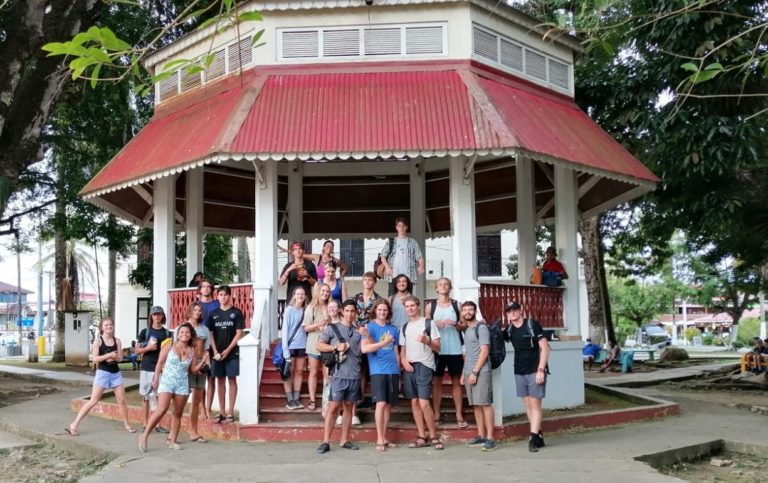
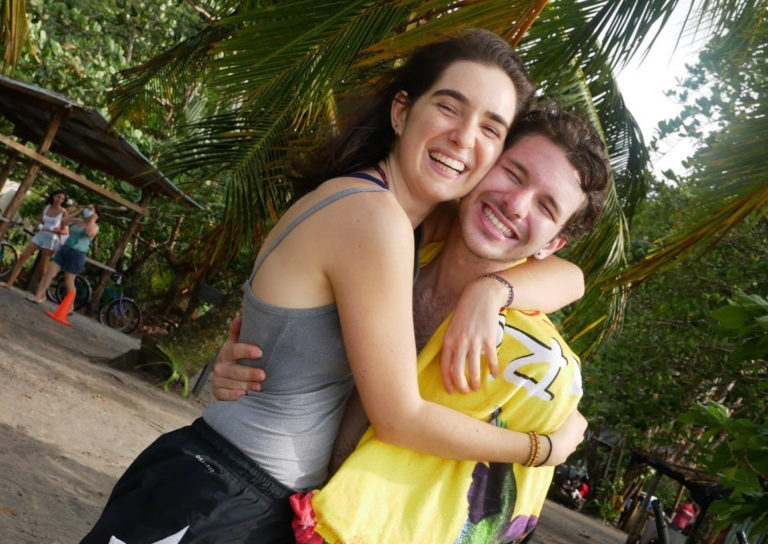
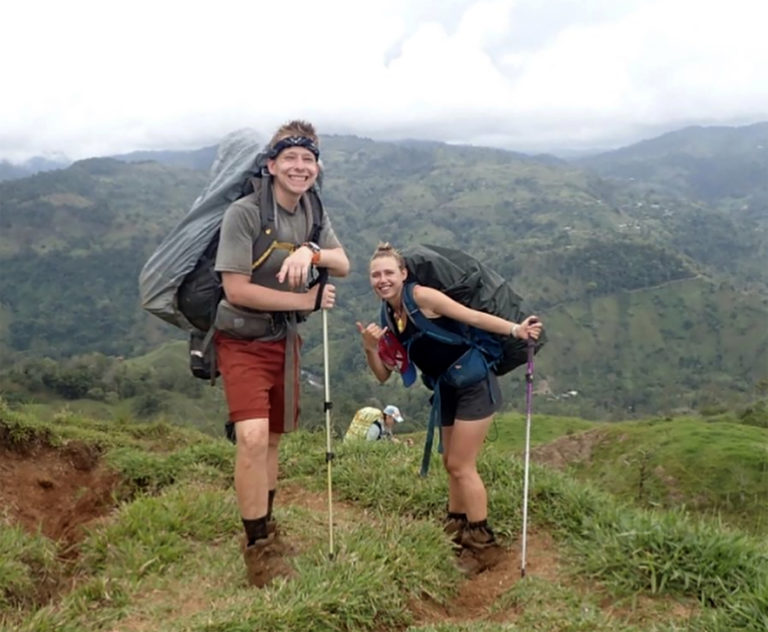
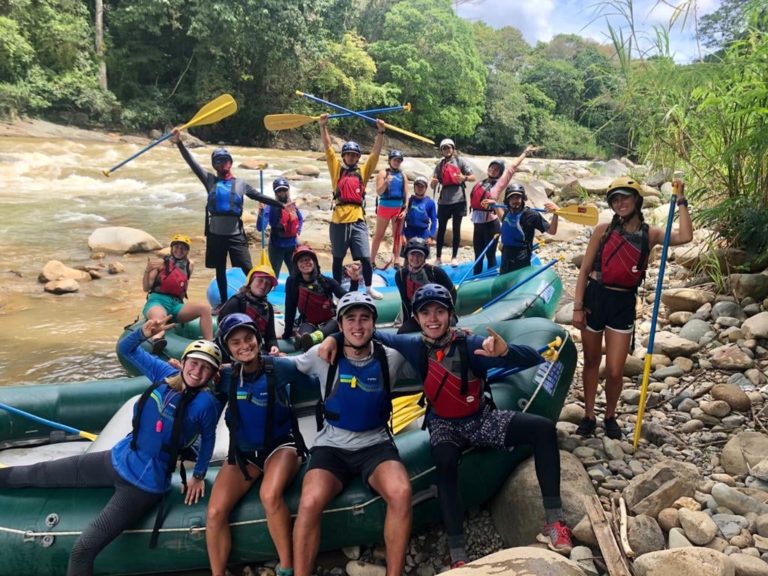
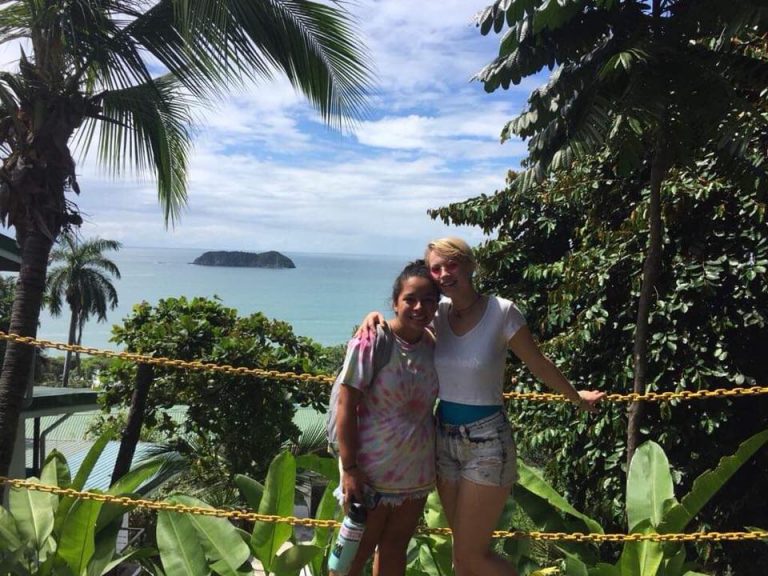
Program Director Trey recently headed down to Pavones along with instructors Sean and Britten in order to finalize plans for how courses would run at this location, as well as get some surfing in. Take a look below at some of the pictures they were able to snag while on the scouting mission.
Interested in joining us for a surf adventure? Learn more about our Surf Intensive courses offered this summer by clicking here!
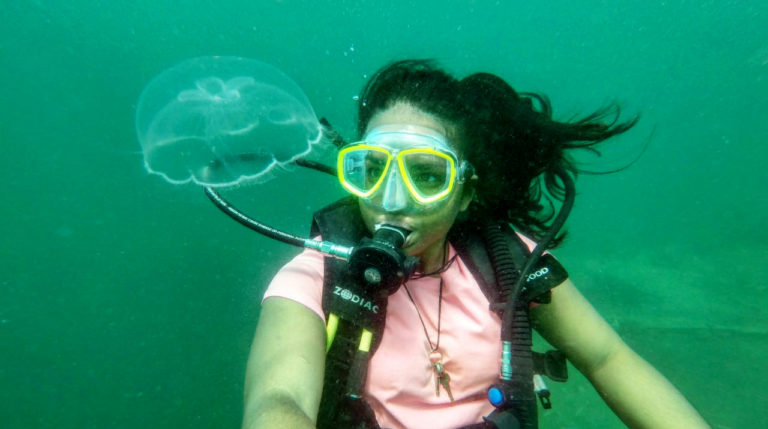
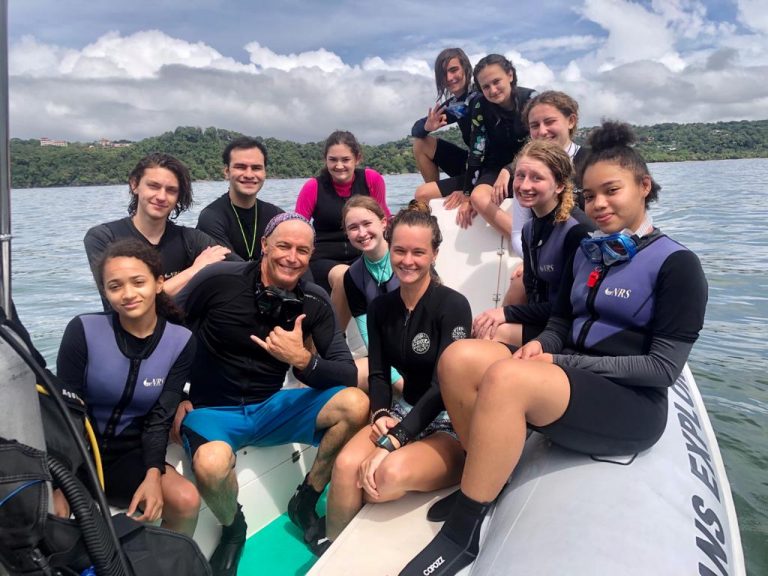
The Leadership and Tropical Challenge groups are back from their trip to Bocas del Toro, Panama where they were all working on their Scuba certification. Take a look at some of their pictures below!
With the groups now separated again, the Tropical Challenge folks are doing some climbing and service projects, and the Leadership students are headed out to their surfing phase!
This past weekend saw some intense action here on the Costa Rica Outward Bound base. As the remainder of our semester programs wrap up their time in Panama, a large portion of the staff went through training on a variety of topics ranging from conflict resolution to more advanced strategies for teaching while on course. In addition, the group took a trip to downtown San Jose to expand the group’s combined knowledge of the city and some of the locations that do not get as much attention. Other activities included a group trip down the local waterfall near the base, in order to get additional staff prepared for one of the more popular activities offered here, the waterfall rappel! Finishing up the weekend was a festive staff holiday gift exchange and a delicious staff dinner, capping off what has been another amazing season for Costa Rica Outward Bound. Although a busy weekend for the staff here, everyone is excited and ready to go for the 2012 season, which starts off with groups just 2 days after New Years!
So you’ve taken a Costa Rica Outward Bound course or something similar. Now what? A lot of students wonder how they can market themselves for future jobs and/or colleges after going through an experience that distinguishes them, both personally and professionally. The difficult part is communicating the impact of a course experience and effectively transferring it to a resume or personal statement. When looking for a standout factor, employers and acceptance committees alike want to see how applicants can add value to their organizations — so let’s look at five ways you can boost your resume and market your unique Outward Bound experience.
1. Teamwork – In terms of overused buzzwords, “teamwork” sits pretty high on the list; however, an Outward Bound course takes the otherwise subjective concept and makes it significantly less biased. Sure, working with a team to complete a project or meet a deadline is valuable, but being able to say that you literally spent 24-hours a day with a group of unknown peers to belay each other down a cascading waterfall or stay motivated to hike across an entire country awards you a lot more points in the teamwork category. Considering that many companies are shifting towards more collaborative work environments, they’ll love the assurance that you can truly perform as a team player and furthermore, that you can prove it.
2. International Experience – Costa Rica Outward Bound students are immersed in a foreign culture and spend time learning a foreign language every single day. As organizations stretch their operations across borders more than ever, being able to cite specific examples of cultivating genuine cultural awareness can increase your chances of getting hired or accepted into a higher education program. All of our alumni can highlight personal interactions with Costa Rican families, what it’s like to cross international borders, and how they learned enough Spanish to successfully navigate a local market — they might not be fluent, but they can problem solve and figure out how to communicate, a beneficial skill not every candidate can claim.
3. Certifications – Many of our courses offer multiple certifications that are internationally recognized. Depending on what type of work you’re looking for, being able to list these can potentially be the difference between “We’d like to offer you the job!” and “Unfortunately we’re looking for someone with more experience.” The Leadership Semester program is designed specifically to avoid the latter response (especially for jobs in the outdoor industry), allowing students to earn up to 7 certifications. The main point is that you should take advantage of the opportunity to beef up the “Additional Experience” section of your resume with items like CPR/AED for the Professional Rescuer or First Aid (America Red Cross). It shows that you’re competent in other fields and have unique interests. *By the way, any time an acronym is used, be sure to spell out what it means in order to avoid any confusion.
4. Community Service – A lot of universities are taking a more holistic approach to their admissions criteria these days. While grades and standardized test scores still reign supreme as determining factors, well-rounded students with diverse experiences but less-than-perfect GPAs are beginning to find themselves on university campuses more consistently. All of our courses have a strong service project component that takes students into remote villages to paint local schools, build medical clinics, and install safe drinking water tanks. Be sure to mention what the specific project was, but more importantly, what you gained from it and how it applies to other areas.
5. Leadership – Alright, this one can be tricky. How can you make it clear that your “strong leadership skills” don’t get the same amount of attention as everyone else who has written a resume in the last 300 years, which is to say, very little. Being able to say that you’ve developed and refined your own personal leadership style during an Outward Bound course carries a lot more weight. Are you a participating leader? Maybe your approach is more democratic or perhaps you prefer to delegate? If you’re a Costa Rica Outward Bound alum, think about the leadership wheel — which direction did you identify with?
While these suggestions will hopefully build a solid foundation for starting your resume or personal statement, the most powerful way to separate yourself from other applicants is to be honest about what your Outward Bound experience meant to you. If you have a course memory that changed who you are or the way you think, don’t hesitate to focus on it (requesting a letter of recommendation from instructors can also have a positive impact on your chances of landing a job). So good luck out there, students! Boost those resumes!
Practice makes perfect, and that is exactly what our fall 2011 leadership students did this past weekend. The leadership class took part in a simulated emergency scenario, where every student had to put their Wilderness First Responder skills to use. The Wilderness First Responder, or WFR, is a serious certification required of nearly every outdoor professional, including our own staff here at Costa Rica Outward Bound. Walking up the hill as darkness fell on the base campus, the group was confronted with a remote accident scenario involving two cars, four hysterical and injured passengers, numerous distracting bystanders as well as a severely injured and inebriated cyclist. All this was set to test the medical ability and personal nerves of our WFR students. The students were required to immediately set to work, managing a hectic situation that tested everyone’s knowledge of medical scenarios as well as their ability to act under pressure. After assessing the situation, students went to work treating major injuries, deciding which people were the priorities for evacuation, as well as managing a slew of distractions designed to prevent them from accomplishing their tasks.
In our de-brief, many students commented on how even though a simulated emergency, the scope of the accident, the stress of managing so many different injuries and the numerous distractions made it difficult for some to focus. Furthermore, having to evacuate several victims proved to be a difficult task, as multiple trips up and down the hill is enough to make the most athletic person require their own medical attention. In all, the scenario was a great opportunity to practice skills as well as experience a sample of the stress one can feel in the field!
The 2011 World Rafting Championships were held in Costa Rica this year on the famous Pacuare River. Teams from 32 countries paddled the same rapids many of our students learn to guide rafts themselves. I could end this post right here and its title would already make sense, but let me explain just to make it clear.
The fact that our students get to experience the exciting world of whitewater rafting on a river deemed worthy of hosting the World Rafting Championships is equivalent to learning how to play soccer at Soccer City Stadium in South Africa (that’s where the FIFA World Cup took place, just as a reminder). So maybe the sport isn’t quite as popular, but needless to say, it does make our students way cooler.
The event consists of four different competition styles: the Head to Head, the Downriver, the Sprint, and most technical of all, the Slalom. All are injected with whitewater adrenaline, but by the time I made it to the river the only one remaining was the Slalom. Never have I seen such a higher density of athletes speaking foreign languages, inflatable rafts, and bulging forearm muscles in one place. The atmosphere was great, especially considering that I was watching directly from the river bank accompanied by the secondary team from Croatia – they explained the history of a sport sliding more and more into the mainstream, its significance to them as raft guides, and how judges score the complex maze of slalom gates. Below, the American team paddles through the middle section of the course (I learned that the man proudly waving the flag is the father of one of the members).
As I watched the representative teams from so many different countries impressively navigate their ways through the course, I couldn’t help but be reminded of the time spent on the river with previous Leadership Semester students on the same stunning river. We would joke about how we were waiting for dinosaurs to storm their way to the water’s edge because clearly this was Jurassic Park we were paddling through (naturally, anyone who didn’t play along would be the first victim).
If you’re interested in following the current Leadership students’ adventure here in Costa Rica, including their training on the river, be sure to check out the regularly posted course updates. Also keep in mind that our brand new Tropical Challenge Semester course offers the same guide training on the same river.The Leadership students were on the Pacuare not to learn how to avoid Hollywood reptile encounters, however; they were on the Pacuare to learn to how to apply their Whitewater Rescue Technician (WRT) training and guide the boat through some less-than-taciturn rapids. Upon wishing my countrymen good luck in the upcoming heat, they admitted their jealousy — the American team admitted that they were jealous of the Costa Rica Outward Bound students for getting to develop their guiding skills on such an amazing river.
![]() |
| On base activities with the IB program |
Further training took part in Iztaru, a local Boy/Girl Scout reservation near our base here at Costa Rica Outward Bound. Our staff helped to train the instructors at the reservation on first aid, CPR, technical ropes know-how as well as general climbing wall procedures.
![]() |
| Training with the Tico Scouts! |
As a local organization, we here at Costa Rica Outward Bound are always looking for opportunities to help the communities in which we work. One of our strongest community relationships is with the local Costa Rican scouting association.
Recently the association acquired a new property near the warm river climate of the Sarapiqui River. They want to expand their team building programs for Costa Rican boy scouts and girl guides, as well as offer new programs focused on swimming and building and testing hand-built rafts.
Some of our river staff took a trip out to the association’s property to help scout out (no pun intended) its river access and ensure it was safe for the proposed activities. Costa Rica Outward Bound will also help in river program development to support the association’s efforts to provide opportunities for Costa Rican boys and girls to develop leadership skills and team building through scouting.
Staff trips at Costa Rica Outward Bound are always something we look forward to. Our recent end-of-high-season trip to the Lopez household in Piedras Blancas was certainly a nice treat and followed a route many alumni will remember. Complete with a hike, visit to Rancho Tinamu, stop over at the Grenados household, fishing, river exploration and a good ol’ fashioned cook out, a first-rate time was certainly had by all! So take a look at our trip recap and enjoy!
Recently, marketing staff member Courtney Black went on course with this summer’s last 15-Day Multi-Element course! One of the perks of working for OB Costa Rica is the opportunity to enjoy some of the adventures that our students get to enjoy as staff! This particular course is renowned as our “adventure sampler pack” and includes everything from rafting and hiking to waterfall rappelling and surfing.
Not exactly a seasoned outdoor enthusiast, Courtney was mildly apprehensive about the hiking portion of the course, but was still eager to break in her backpack for a trek that so many of her colleagues had raved about.
The course began with a trip down the Class III Rio Sarapiquí. Both staff and students were pleased to have gorgeous weather and great whitewater. Students, Olivia and Andrew, manned the front of the raft and steered us effortlessly down the river (with help from Whitewater Coordinator Jody).
The next day, the hiking portion of course began. One of the more challenging hikes of the course, the group left base camp to arrive at Brujo. From there, they hiked an impressive 15 km across streams and up mountains to arrive at the Lopez house in Piedras Blancas for a homestay. They made sugar from homegrown sugar cane, ground corn for tortillas and rappelled down the face of a waterfall. While the hike had its ups and downs (both literally and figuratively) it was well worth the trek.
After two days at the Lopez house, the group migrated to instructor Orlando’s home another 5 km up the hill. A word the group quickly learned was “arriba” or “up.”
Orlando’s house is beautiful and overlooks a beautiful valley in Piedras Blancas. It is here the students had their “solos”, which is a time for students to reflect on their experience away from the group, where they spend their time camping under a tarp, with only pen and paper and their thoughts. For Courtney, this time meant avoiding the rain, as she missed an important lecture in knot tying and tarp securing.
Next stop: Hernand’s home, which overlooks the banks of the Rio Savegre. There we baked homemade bread and learned about “Tico” culture. Interesting fact: The Rio Savegre is one of the top two cleanest rivers in Central America.
Exactly a week in on course, the group hiked Rancho Tinamú (6 km). It was a steep hike, but the view along the way was beyond incredible. Upon arrival, the group took a swim in La Olla de Bruja, or “the witch’s pot” which is a swimming hole underneath a waterfall about 1 km from the lodge.
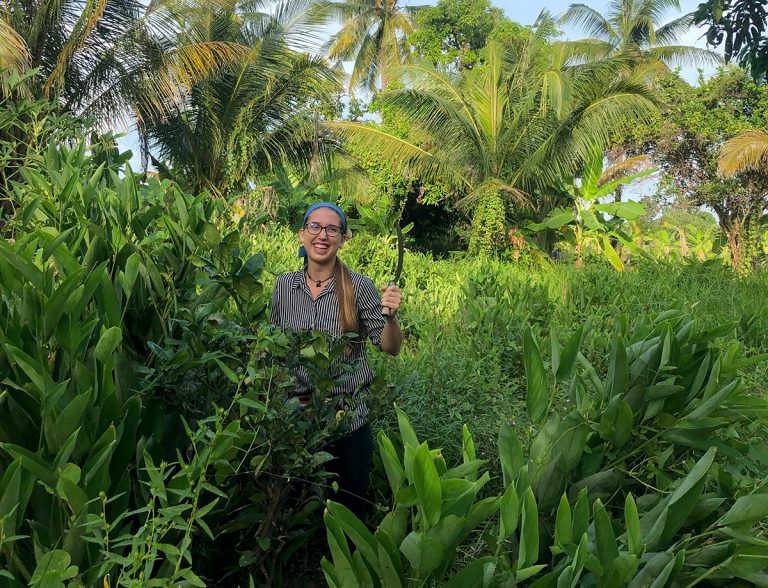
The afternoon was spent procuring our dinner in the form of a ceremonial chicken kill. This exercise is intended to encourage students to consider where their food comes from. A former vegetarian of ten years, Courtney was less than enthused to wield the machete, but did appreciate the lesson taught (and will now reconsider her omnivore practices).
On the final day, the group hiked 18 km from San Isidro de Dota to Londres de Quepos. It was a doozie, but the group survived and handled it like champs! Promises of ice cream at the destination is always good incentive!
Total miles hiked: 30. Weight of packs: 30-40 lbs. Confidence boosts: Immeasurable.
At this point, Courtney returned to base to go back to the “real world” and her job in the marketing office, but the rest of the group went on to do a service project at Manuel Antonio, surf, and have one more go at rafting, this time on the Rio Pacuare.
Despite some challenges, scrapes, and some tests of will, Courtney had a blast. She reflected on her time stating that, “Coming in to this experience I thought I knew exactly what to expect. I had heard a lot about the courses from instructors and students, I knew about the activities, and felt prepared. In the end, however, I felt like I learned as the students did and left with a sense of awe and accomplishment for having embarked (and completed) such a unique expedition.”